


You’ve felt it before: the team looks busy, the meetings stack up, the calendars stay full, yet forward momentum is nowhere to be found. Nothing is on fire, but nothing is truly moving. The collective why gets fuzzy. Everyone works hard just to stand still.
That’s Leadership Drift.
Drift doesn’t announce itself with a crisis. It creeps in when your attention slips, your vision dulls, or you let a subtle, unhelpful thought go unchallenged. It starts in a leader’s mind, and it spreads through the everyday language you tolerate.
Here are eight common phrases that reveal the mindsets pulling your team off course—and how each one sabotages clarity, confidence, and control.
1. The Complacent Mindset
“If it worked before, it’ll work again.”
This thinking clings to the comfort of old solutions while the world moves on. Departments protect their familiar habits. Innovation stalls. Leaders chase short-term wins instead of building long-term momentum. While you polish yesterday’s playbook, your competition writes a new one.
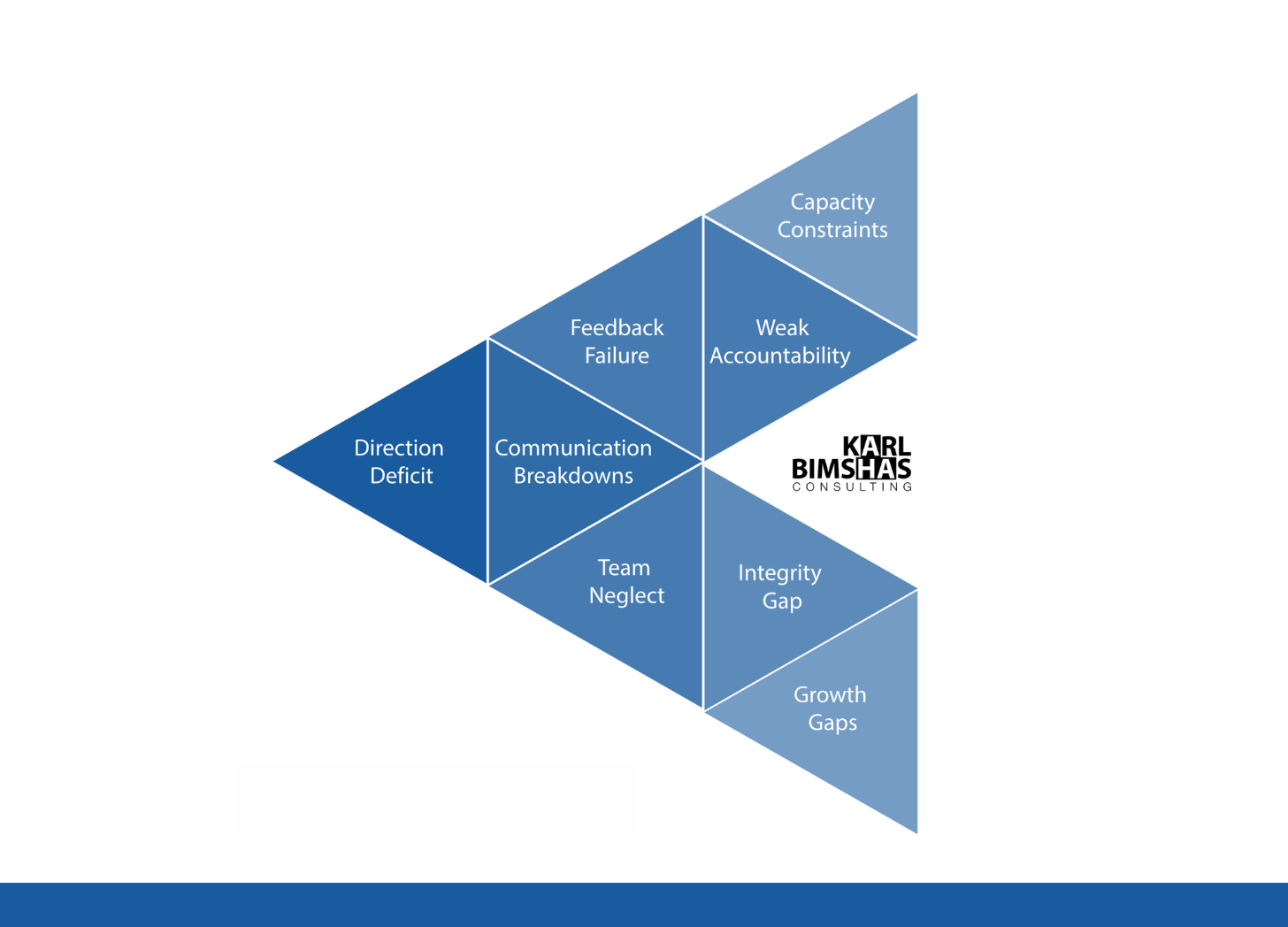
This mindset signals a Direction Deficit. Without a vivid vision and a strategy that energizes people, your team loses sight of what matters and why it matters now.
2. The Assumption Mindset
“I thought someone else told them.”
This phrase exposes gaps in communication and ownership. When no one owns the message, everyone fills in the blanks with their own version of the truth. Silos form. Trust erodes. People lose time and patience correcting work that never aligned in the first place.
This reveals Communication Breakdowns. Weak or inconsistent communication destroys clarity, coordination, and confidence.
3. The Inertia Mindset
“Let’s stay the course.”
Consistency is valuable, but leaders sometimes hide behind it. They use it to avoid conflict, escape scrutiny, or ignore real-time data. Problems grow. Strategies expire. Teams drift because no one wants to say, “This isn’t working anymore.”
This signals a Feedback Failure. When leaders don’t listen or act on what they hear, the organization loses its ability to self-correct.
4. The Transactional Mindset
“People are lucky to have a job.”
This mindset strips humanity from leadership. It creates fear instead of engagement. People stop speaking up. Top talent walks out. The rest check out. Trust evaporates.
This comes from Team Neglect—the fastest way to kill morale and invite disengagement.
5. The Diffusion Mindset
“That’s not my job.”
When ownership becomes optional, accountability collapses. Tasks stall in limbo. Deadlines slip. People point fingers instead of solving problems. Goals fall apart not because of skill gaps but responsibility gaps.
This mindset exposes Weak Accountability. When leaders blur or avoid ownership, the team has no chance of staying aligned.
6. The Expediency Mindset
“Do what you have to do, not what’s right.”
Shortcuts search for speed but cost integrity. They create inconsistent decisions and unpredictable standards. Over time, the team can’t tell the difference between efficiency and unethical behavior. Trust disappears in the grey zone.
This behavior creates an Integrity Gap—a widening space between stated values and actual behavior.
7. The Overload Mindset
“We don’t have time for that.”
This phrase signals a team trapped in survival mode. Everyone reacts, no one leads. Burnout spreads. Chronic bottlenecks become normal. Strategy always loses to urgency.
This reflects Capacity Constraints. Even strong leaders fail when systems, tools, and staffing can’t support the mission.
8. The Apathy Mindset
“Why bother? No one notices.”
This phrase reveals a broken connection between effort and recognition. When people believe their work doesn’t matter, they stop investing in their growth. Skill development stalls. Initiative disappears. The culture drifts toward mediocrity.
This exposes Growth Gaps—a failure to develop, challenge, and acknowledge the people doing the work.
Correcting the Course
Leadership Drift rarely hits all at once. It slips in through small, unchecked thoughts—the quiet phrases you let pass, the internal story you don’t challenge. Drift starts inside the leader before it shows up in the culture.
Pay attention to the language you use and the language you tolerate. Every phrase is a signal telling you where clarity, confidence, or control is slipping.
Which phrase shows up most often in your world—and what conversation will you start tomorrow to correct the drift?
If you see these phrases in your team, or in yourself, don’t wait. Explore Karl Bimshas Consulting’s answer to Leadership Drift, and take back ownership of your direction.
