

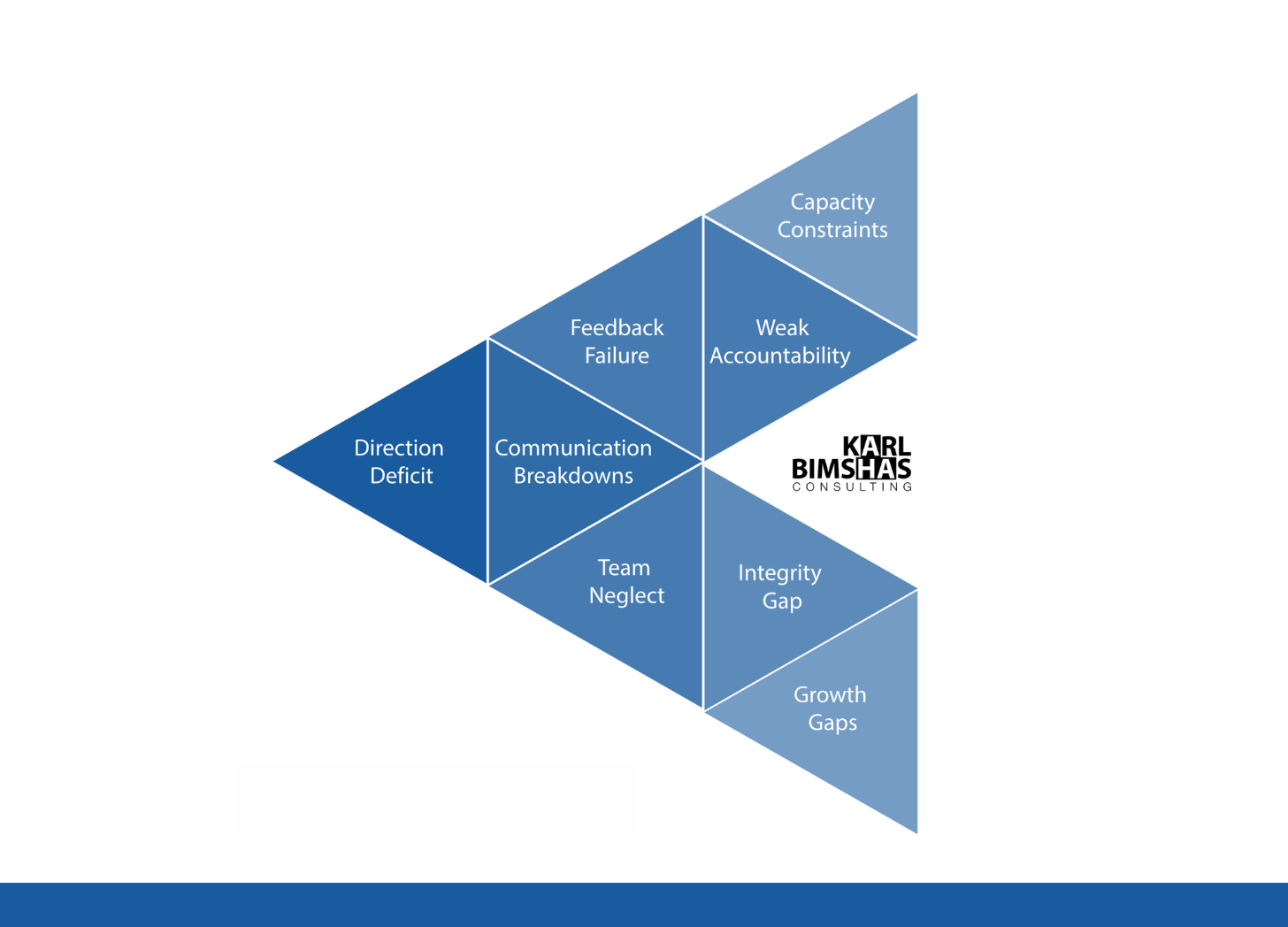

Incompetence rarely kills leadership; accommodation does. Leaders drift when they accommodate pressure, urgency, and noise. Over time, reaction replaces intention. Direction bends toward whoever is loudest, most insistent, or most immediate.
While leaders stay busy and teams stay active, the organization eventually stops producing results. This is leadership drift. It does not mean leadership is absent; it means leadership is surrendering its role.
What Drift Looks Like in Practice
Drift rarely presents itself as a crisis. Instead, it appears as a set of environmental conditions where pressure, rather than intention, determines the course.
When an organization drifts:
- Priorities Shift: Purpose exists, but it no longer governs daily choices.
- Volatility Increases: The leadership’s emotional tone becomes performative or withdrawn under stress.
- Success is Reactive: Teams define success after work begins or, worse, after problems emerge.
- Truth is Buffered: Uncomfortable truths surface late, softened, or not at all.
- Ownership Diffuses: Leaders assign work based on habit rather than capacity, leading to blurred roles.
- Meetings Multiply: Gatherings fail to produce clarity, alignment, or movement.
- Optics Overrule Health: Short-term appearances quietly override long-term organizational health.
This erosion does not require any malicious intent; it simply stems from a lack of thoughtful leadership.
Why Drift Persists
Leadership drift continues to occur because it is manageable, at least for a time.
People adapt. They compensate for the lack of direction. They silently lower their expectations. Eventually, effort increases while trust erodes. Energy leaks from the system. The organization keeps moving, but with diminishing returns.
At this stage, leaders often blame execution, motivation, or systems. However, the cause is simpler and harder to face: Leadership conditions have gone unregulated.
Leadership is not control. It is guidance and regulation.
Effective leaders do not eliminate pressure; they prevent pressure from becoming the decision-maker. They regulate direction to keep it intentional, tone to keep the system grounded, and pace to ensure decisions are neither reckless nor paralyzed. This is stewardship.
The 8 Markers of Leadership Health
Healthy leadership environments share observable conditions that hold across levels.
- Intentionality – Direction is shaped deliberately rather than hijacked by urgency.
- Clarity – Purpose governs trade-offs and priorities.
- Stability – The emotional tone set by leadership steadies the system.
- Safety – Truth moves upward without fear of retaliation.
- Alignment – Work is matched to strength and capacity.
- Integrity – Roles, ownership, and decision rights are understood and respected.
- Utility – Meetings only exist to decide, align, and move work forward.
- Courage – Leadership choices favor long-term health over short-term comfort or optics.
When these conditions hold, leadership compounds.
When they weaken, drift begins.
The Cost of Not Looking
Most leadership teams sense drift long before they name it. They feel it in the tension, the repetition, and the problems that refuse to stay solved. They do not lack intelligence; they lack a clear mirror. Without that mirror, leaders try to explain drift away as market pressure or “people problems” until it becomes the operating norm.
A Simple Test of Reality
To test if a leadership condition is truly “in place,” ask one question:
“Would the most junior person in the organization experience this as consistently true?”
If the answer is no, the issue is not perception; it is leadership reach. That gap is drift.
What Comes Next
Awareness does not correct drift; inspection does. Leadership drift is not a character flaw, but allowing it to persist is a leadership decision. The conditions already exist. The only remaining question is whether you are willing to see them clearly.
Karl Bimshas is the Leadership Strategist and Author who stops leadership drift in mid-career professionals, restoring clarity, confidence, and accountability through the Leadership Guidance System™.
